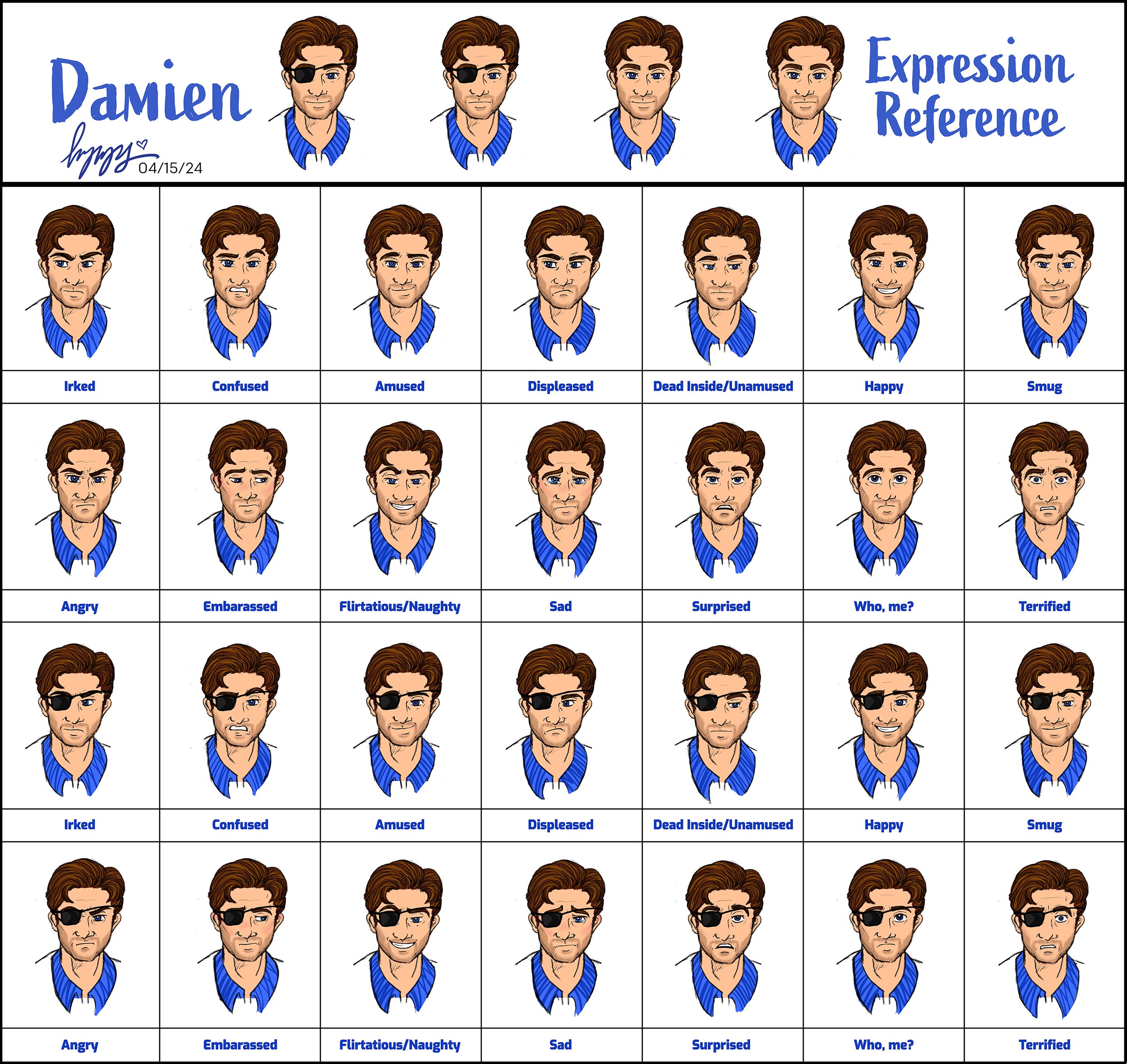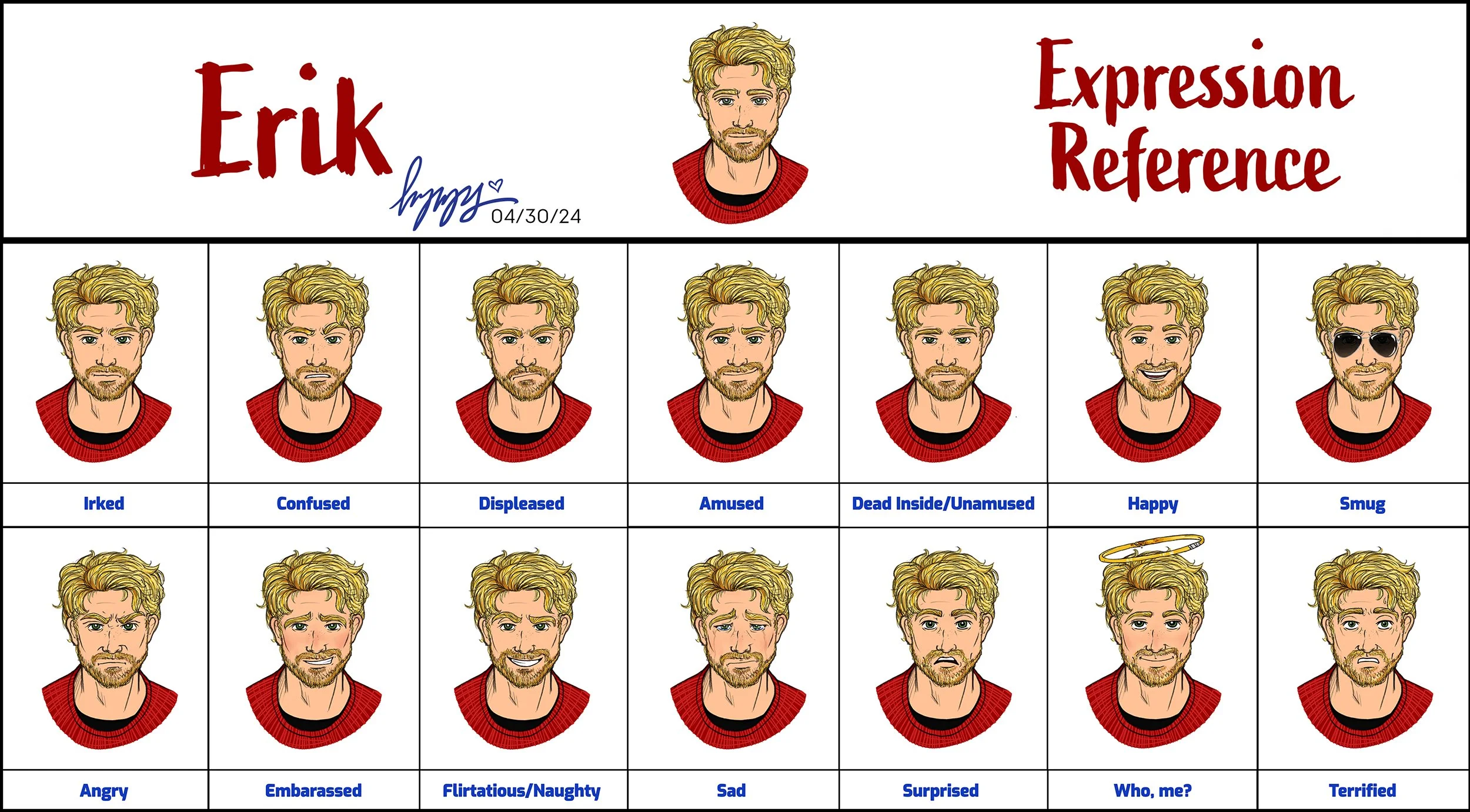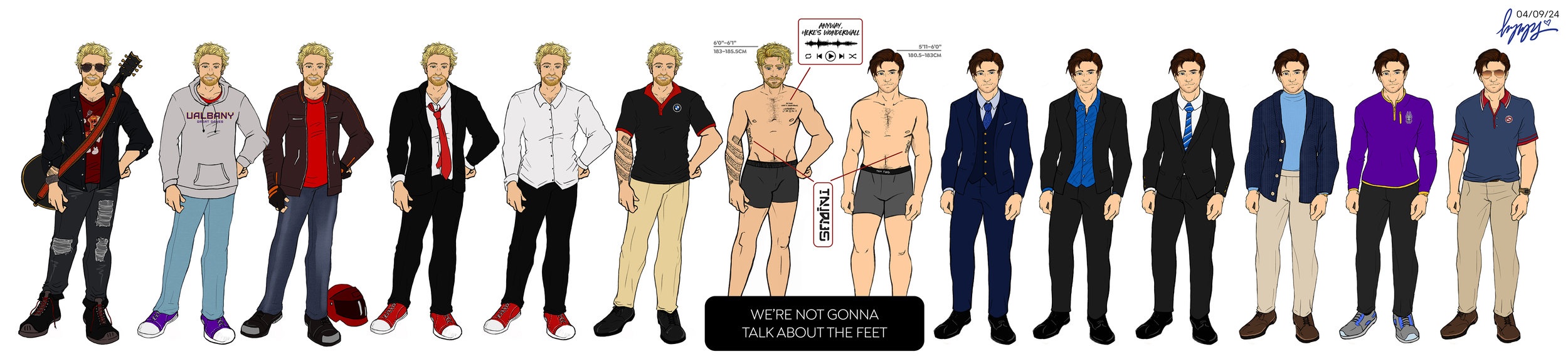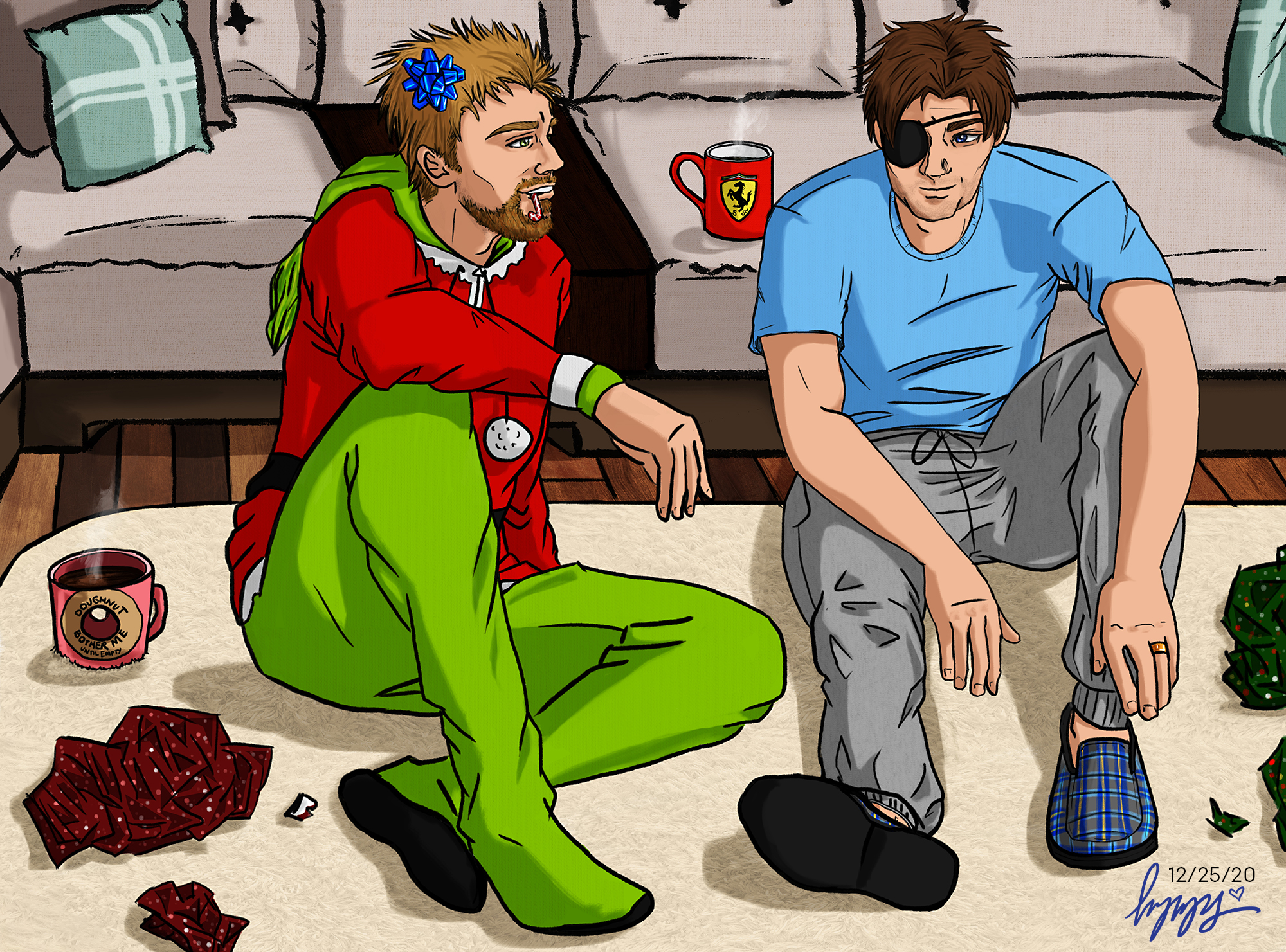
There’s power in one’s history.
About the Concept Art
You don’t spend two decades with characters without sketching them—mentally, on paper, in late-night Photoshop experiments best left unseen. Same thing goes for those early manuscript drafts. Yikes.
This isn’t all of it. Only what has enough dignity to share.
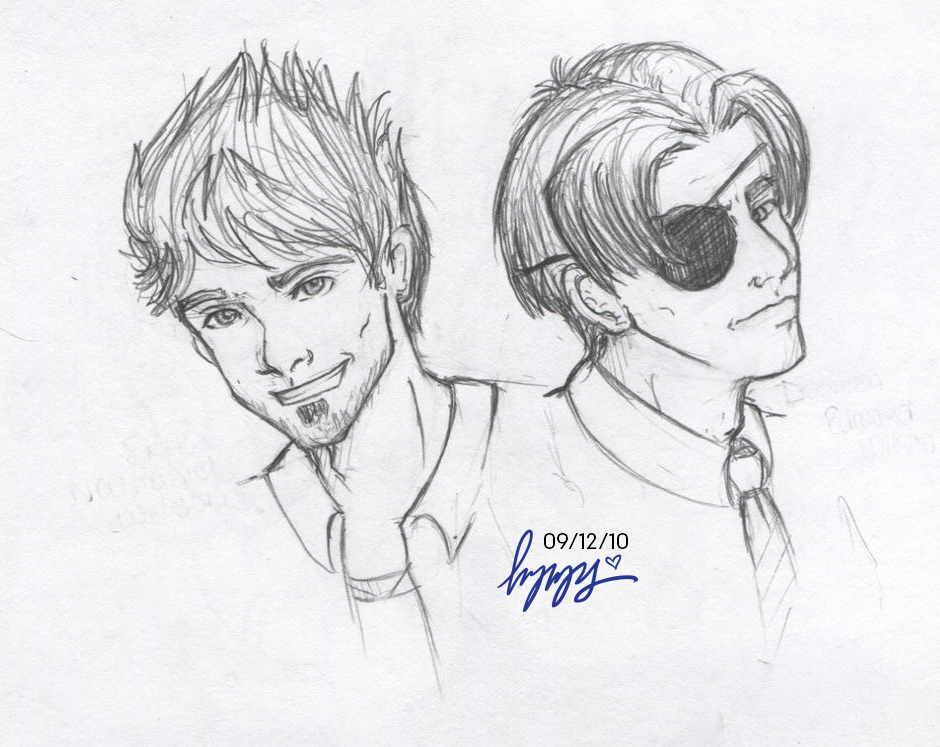
Whether I was an artist first or a writer first, with these characters, they are one in the same. Interchangeable. OCs drawings and fanfiction influence congealing into Damien and Erik and Anne in a way whose genealogy I struggle to pin down.
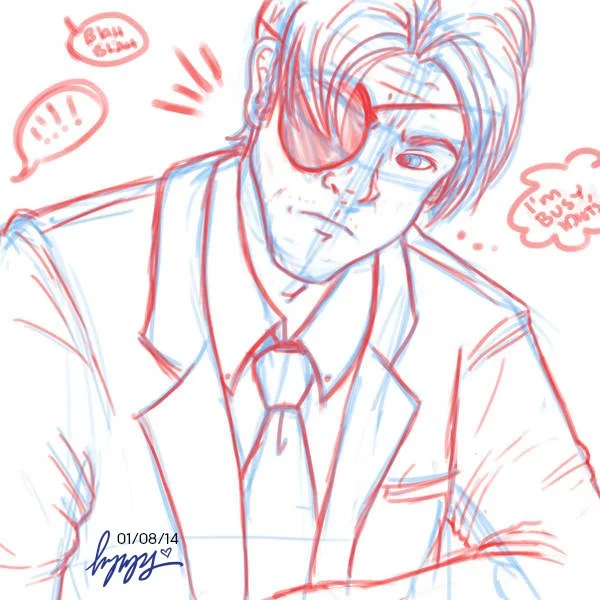
They started as concept art, the kind that floated around in my head for years. Revisiting every so often; percolating a little bit more. Mental notes. Paper notes. Comics with their caricatures.
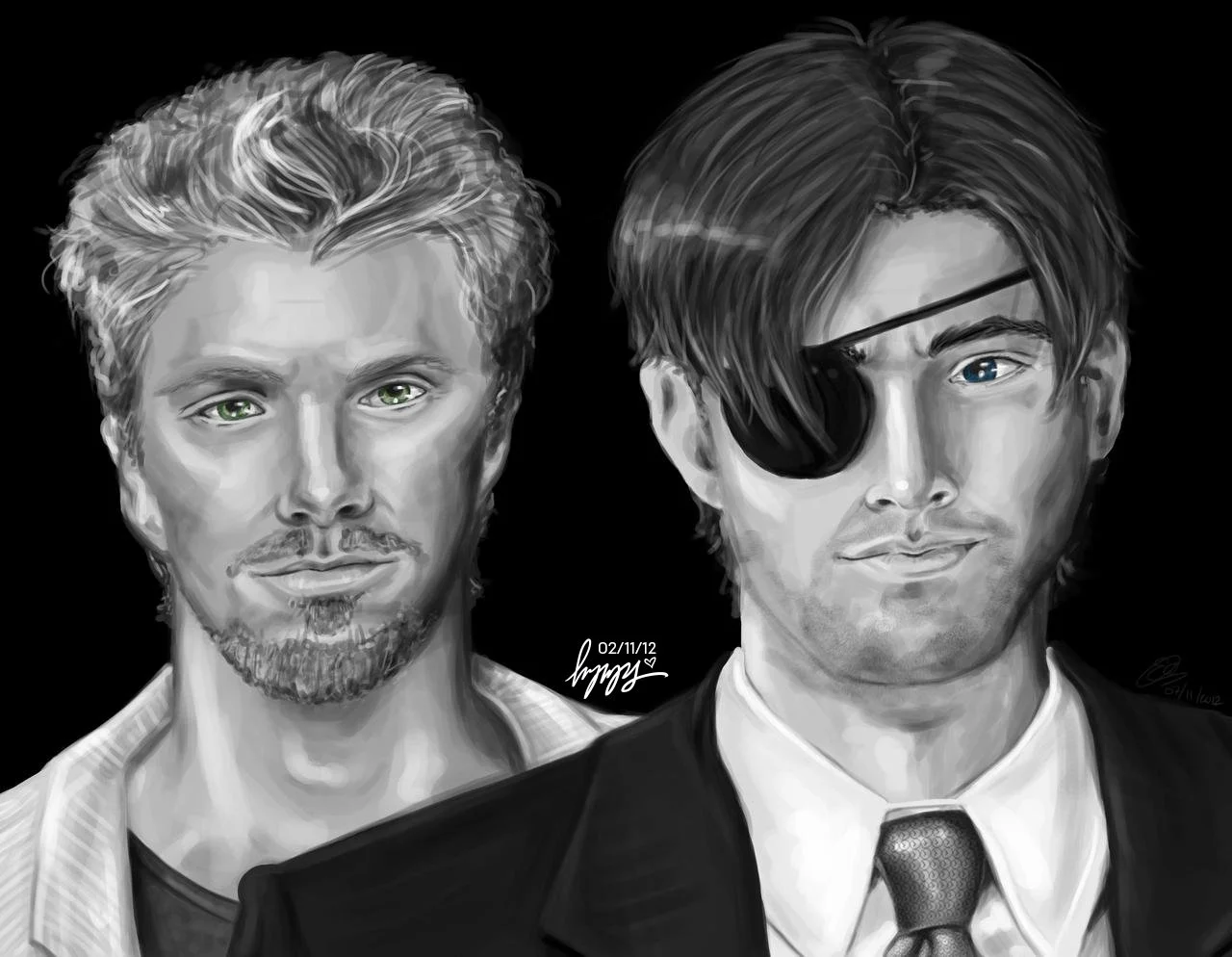
Damien and Erik finally took more photorealistic shape—lifelike, the way I always envisioned—with some cross-platform fussing from Midjourney and Chat GPT; yes, I have sinned; I recognize that. I am admittedly not skilled enough as an artist to render them lifelike. I have not included those in this gallery.
But these more lifelike faces needed a world that felt just as real. The diegetic items you’ve sifted through—logos, documents, fragments of their world—are just an extension of that same impulse to world build in every medium I love. All hand drawn by my hand or designed by my mouse.
That’s how this all began: a man with an eyepatch who works at a power plant.
Over time, both Damien and Erik naturally changed, same as I was doing.
Damien didn’t have facial hair in the beginning. Now? Damien wears a sharp stubble that mirrors his precision.
Erik did away with the soul patch (thank god), and his beard grew in with him—messy, full, just like he is.
And yes, Damien’s eyepatch lives on. Even though he’s (mostly) done away with it in the novel, he still wears it here—because that’s how he started.
And because subtlety wasn’t in my toolkit yet. His forever eye-conic phase reigns eternal.
Some designs evolve, and some just linger, because they’ve earned their place.
And sometimes? They become caricatures—little comic-strip versions of themselves, living in the margins of my brain. Moments that never made it into the novel, but still feel like they happened. Some of those moments are here, too.
You might notice she’s Anne is not here in the same way of the other two.
That’s intentional.
Anne has always been a little harder to pin down—not because she isn’t real, but because she’s the space a lot of us step into.
She’s not just observed, she’s felt—in the silences, in the way others see her, in how she moves through this world.
Her presence is there. But like the story itself, she’s about what’s beneath the surface.
Wilsonder is a contemporary literary novel rooted in emotional intimacy, identity, and restraint. But its world doesn’t end with the last page. The power of a story lives in its details—not just the written ones, but the ones that build the world around the characters. A signature on a document. A sharp tagline. A glance across the room that carries too much weight. The items collected here are part of that immersive design. Diegetic materials—documents, artifacts, and textures of a world just beneath the surface. The echo of a boardroom. The reverb of a concert venue after the headliner walks offstage. These pieces don’t just support the story. They extend it. Welcome to the Wilsonder world.